Locoregional delivery of IL-13Rα2-targeting CAR-T cells in recurrent high-grade glioma: a phase 1 trial Christine E. Brown, Jonathan C. Hibbard, Darya Alizadeh, M. Suzette Blanchard, Heini M. Natri, Dongrui Wang, Julie R. Ostberg, Brenda Aguilar, Jamie R. Wagner, Jinny A. Paul, Renate Starr, Robyn A. Wong, Wuyang Chen, Noah Shulkin, Maryam Aftabizadeh, Aleksandr Filippov, Ammar Chaudhry, Julie A. Ressler, Julie Kilpatrick, Paige Myers-McNamara, Mike Chen, Leo D. Wang, Russell C. Rockne, Joseph Georges, Jana Portnow, Michael E. Barish, Massimo D’Apuzzo, Nicholas E. Banovich, Stephen J. Forman , Behnam Badie
High-grade glioma (HGG) is a fast-growing and often lethal cancer that occurs in the brain and sometimes the spinal cord. Current treatments exist but their effectiveness is limited, revealing an urgent need for better therapies.
In this Phase I clinical trial involving 65 patients, scientists tested the safety and early effectiveness of a new treatment called CAR-T cell therapy. In this approach, a patient’s immune cells are removed and modified so they can recognize and attack cancer cells. To destroy this particular tumor, researchers targeted a protein receptor called IL-13Rα2 found on tumor cells. By testing different injection locations, doses and monitoring patient safety and side effects, researchers found that this therapy was safe and improved patient quality of life. More research will be done to determine dosage, effectiveness, and safety in larger populations.
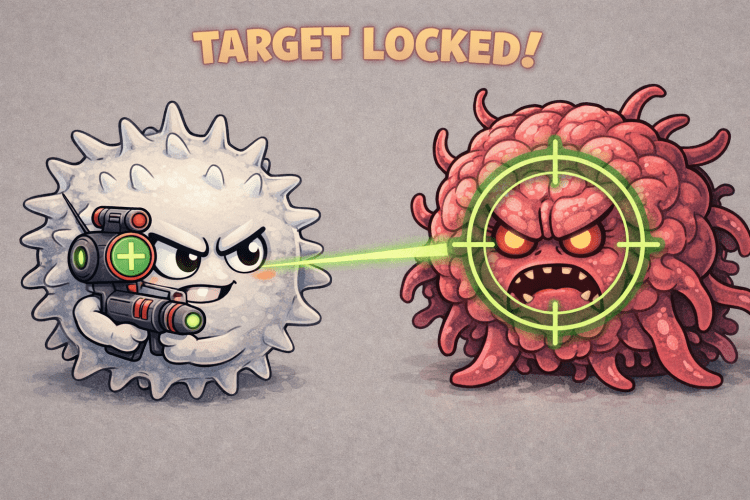
High-grade glioma is a very aggressive disease, and this research represents a critical step toward developing new targeted treatments.
 Sci Scribes